PROJECT: SUCKER CALLS AND LISTS (PART 1)
PLEASE SHARE THIS PUBLIC DOCUMENT
WHAT IS A SUCKER LIST AND WHY DOES IT EXIST?
A “sucker list” is a term used in fraud investigations for information identifying people who have previously responded
to or fallen victim to scams. These lists can contain personal and contact information,
details about the type of fraud involved and, in some cases, information about the amount lost.
Fraudsters may buy, sell or exchange these lists because a person who has already been defrauded
may be regarded as a potential target for further scams.
The South African public should be aware that information obtained during one fraudulent interaction
can therefore potentially be used in subsequent criminal approaches.
Fraudsters operate by identifying potential victims and obtaining information that helps them make targeted approaches.
A previous victim can be particularly attractive because the criminal may already know that the person
has engaged with a particular type of scam.
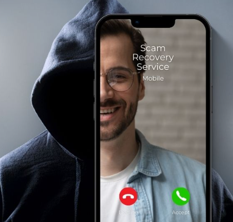
This is particularly evident in recovery scams, where criminals contact people who have previously lost money
and falsely claim that they can recover the money for them, usually in exchange for an upfront payment or personal information. SSS specifically warns that scammers purchase lists of previous fraud victims for this purpose.
A person who has already been defrauded should therefore remain particularly cautious of unsolicited approaches
offering refunds, investigations, legal assistance, compensation or recovery of lost funds.
The fact that a caller knows details about a previous scam does not establish that the caller is legitimate.
The existence of sucker lists demonstrates that victimisation can extend beyond the original crime.
Personal information obtained during one fraud may become useful to other criminals and can contribute to repeated targeting.
THE 3-SECOND SILENCE: HOW YOU GET MARKED
Here is the scenario that plays out thousands of times per day. Your phone rings. You answer. There is silence on the other end.
In that silence, a lot is happening.
Automated dialling systems make millions of calls per day, operating like a fishing net cast across an ocean of phone numbers.
When you answer and say "Hi," "Hello," "How can I help you?" or "Is there anyone there?" — you have just taken the bait.
That brief vocalisation tells the system several things:
You are a human, not a voicemail or dead number.
You are willing to speak first, which signals you are likely compliant and less suspicious.
Your voice can be analysed for gender, approximate age, and even emotional state.
Within those 3 seconds, the system has already flagged you as a live mark.
It has categorised you — male or female, possibly elderly — and initiated the process of routing your call to a scammer who is now armed with a profile of who they're about to speak with.
The scammer who gets on the line is not guessing.
They know they are talking to someone who answers unknown calls, speaks first, and fits a demographic profile they know how to manipulate.
The conversation that follows is designed to take as much of your money as possible, as quickly as possible.
3 WAYS TO RECOGNISE THESE CALLS:
1. The caller is silent when you answer.
A legitimate caller — a person, a business, even a wrong number — will say something.
Silence is not normal.
It is the system processing you as a target.
2. There is a delay before a human speaks.
If you hear a brief pause or a click before someone comes on the line, you are likely being routed through an automated system.
Real callers do not have dead air before they greet you.
3. The caller asks you to confirm information they should already have.
If someone claims to be from your bank, the police, or a service provider and asks you to verify your name, ID number, or address — that is a red flag.
Legitimate organisations that call you already know who you are.
They are not calling to ask you to identify yourself to them.
WHY IT IS A MUST TO BE RUDE AND TO DROP THE CALL:
Many people feel guilty hanging up. They worry: What if it's important? What if it's rude? What if it's actually the bank?
Here is the truth: You owe nothing to an unknown caller.
Not your time. Not your courtesy. Not your voice. Not your name.
Being "rude" by their standards is not rudeness. It is self-defence.
When you stay on the line, even out of politeness, you are giving the scammer exactly what they need: a live voice to record, a willing participant to manipulate, and time to work.
The single most powerful thing you can do is hang up. Not engage. Not argue. Not play along. Not shout. Just end the call.
HERE IS WHY THIS MATTERS MORE THAN EVER:
Your voice can be cloned.
Scammers use AI to replicate voices from just a few seconds of audio.
Once they have your voice, they can call your family pretending to be you, claiming an emergency, asking for money.
The longer you stay, the more they learn.
Every word you say gives them information: how you speak, what you say when caught off guard, what buttons to push next time.
There will always be another call.
If it was genuinely important, the legitimate caller will find another way to reach you — a letter, an official number you can call back, a message through a verified channel.
The rule is simple: If you do not know who is calling, say nothing.
If they do not speak first, hang up.
If they do speak and you do not recognise the voice or the reason for the call, hang up anyway.
You do not have to be polite to strangers who call you out of nowhere.
You do not have to explain yourself.
Hang up. Every time. Without apology.
THE REAL COST: WHAT HAPPENS IF YOU PAY
If you were caught — if you were tricked into paying even a single cent — you do not just lose that money.
You move from the general sucker list onto a far more valuable list: the confirmed suckers list.
This is the list every scammer wants access to, because it tells them something far more useful than "this person answers their phone."
It tells them: this person pays.
And once you're on that list, the floodgates open.
WHY THE CONFIRMED SUCKERS LIST IS WORTH MORE:
Think about it from the scammer's perspective. A fresh sucker list is a gamble. Most people on it will hang up. A few might engage. Only a small percentage will actually send money. It is a numbers game.
But a confirmed sucker is a proven asset. They have already demonstrated:
They can be manipulated into believing a story.
They can be pressured into acting quickly.
They will pay when the right buttons are pushed.
That is worth far more than a name and a phone number. That is a repeat customer in the worst possible sense.
WHAT HAPPENS NEXT:
Once you are marked as a confirmed sucker:
1. You will be targeted again — deliberately.
Your number is no longer just on a list; it is on a priority list.
Expect more calls, not fewer.
Expect better-crafted scams, not amateur ones.
2. They will come back for more.
The first payment was never the goal — it was the test.
Now that they know you will pay, they'll escalate.
A small "admin fee" becomes a larger "release fee."
A "refund" becomes a request for your banking details.
A "prize" becomes a "customs charge."
The story changes; the goal does not.
3. They will suck you dry. This is not a one-time theft. It is an ongoing extraction.
Scammers who have a confirmed sucker will keep coming back with new stories, new emergencies, new opportunities — each one designed to take a little more, then a little more, until there is nothing left.
4. Your number gets sold again — at a higher price.
This is the part most people do not realise. Your details are not just used by the scammer who caught you.
They are sold on to other criminal networks.
And because you are now a confirmed sucker, your number fetches a higher price on the black market. You become a premium product.
Other scammers pay more for you because you have been proven to pay.
5. Different types of scams may target you.
The first scam might have been a fake bank call.
The next might be a romance scam, an investment fraud, a fake inheritance, a "you've won a prize" scheme, or a threat.
Different crews, same list. Your name gets passed around like currency.
THE TRAP WITHIN THE TRAP:
Here is what makes it so cruel: the shame keeps people silent.
Many victims of these scams feel embarrassed.
They do not want to admit they were fooled.
So they do not tell anyone — not their family, not the police, not their bank.
And that silence is exactly what the scammers rely on.
If you have paid, tell someone. Tell your bank immediately. Report it to the police. Tell a family member.
The sooner you break the silence, the sooner you can protect yourself from the next wave — because there will be a next wave.
THE FINAL MEASURE:
Answering puts you on a list.
Engaging moves you up that list.
Paying puts you on the most valuable list of all — and they will come back for more, and sell you on for more, until you stop them.
The only way to stay off these lists is to never engage in the first place.
Do not answer. Do not speak. Do not pay. Hang up.
And if you have already paid — speak up now. Silence is what keeps you on the list.
Specialised Security Services invites the public to the Mike Bolhuis Daily Projects WhatsApp Channel.
This channel is important in delivering insights into the latest crime trends, awareness, warnings and the exposure of criminals.
How to Join the WhatsApp Channel:
1. Make sure you have the latest version of WhatsApp on your device.
2. Click on the link below to join the Mike Bolhuis Daily Projects WhatsApp Channel:
3. Follow the prompts to join the channel.
4. Make sure you click on "Follow", then click on the "bell"-icon (🔔)
CONTACT MR MIKE BOLHUIS FOR SAFETY AND SECURITY MEASURES, PROTECTION, OR AN INVESTIGATION IF NEEDED.
ALL INFORMATION RECEIVED WILL BE TREATED IN THE STRICTEST CONFIDENTIALITY AND EVERY IDENTITY WILL BE PROTECTED.
Regards,
Mike Bolhuis
Specialist Investigators into
Serious Violent, Serious Economic Crimes & Serious Cybercrimes
PSIRA Reg. 1590364/421949
Mobile: +27 82 447 6116
E-mail: mike@mikebolhuis.co.za
Fax: 086 585 4924
Follow us on Facebook to view our projects -
EXTREMELY IMPORTANT: All potential clients need to be aware that owing to the nature of our work as specialist investigators there are people who have been caught on the wrong side of the law - who are trying to discredit me - Mike Bolhuis and my organisation Specialised Security Services - to get themselves off the hook. This retaliation happens on social media and creates doubt about our integrity and ability. Doubt created on social media platforms is both unwarranted and untrue. We strongly recommend that you make up your minds concerning me and our organisation only after considering all the factual information - to the exclusion of hearsay and assumptions. Furthermore, you are welcome to address your concerns directly with me should you still be unsatisfied with your conclusions. While the internet provides a lot of valuable information, it is also a platform that distributes a lot of false information. The distribution of false information, fake news, slander and hate speech constitutes a crime that can be prosecuted by law. Your own research discretion and discernment are imperative when choosing what and what not to believe.
STANDARD RULES APPLY: Upon appointment, we require a formal mandate with detailed instructions. Please take note that should you not make use of our services – you may not under any circumstance use my name or the name of my organisation as a means to achieve whatever end.
POPI ACT 4 of 2013 South Africa: Mike Bolhuis' "Specialised Security Services" falls under Section 6 of the act. Read more here: https://mikebh.link/fntdpv
SSS TASK TEAM:

Copyright © 2015- PRESENT | Mike Bolhuis Specialised Security Services | All rights reserved.
Our mailing address is:
Mike Bolhuis Specialised Security Services
PO Box 15075 Lynn East
Pretoria, Gauteng 0039
South Africa
Add us to your address book
THIS PUBLIC DOCUMENT WAS INTENDED TO BE SHARED, PLEASE DO SO.