PROJECT: CHILD SAFETY AND SOCIAL MEDIA "SHARENTING" RISKS
PLEASE SHARE THIS PUBLIC DOCUMENT
Recent research into “sharenting” — the sharing of children’s images and personal details on social media —
shows that this practice is widespread and carries measurable safety and privacy risks.
Globally, studies indicate that between 47% and 61% of parents post photographs or videos of their children
on social media platforms. Of these, a substantial proportion include identifiable information such as names,
locations, and contextual details that can be exploited by malicious actors.
In some samples, nearly half of the posts featuring children also disclosed personal identifiers and
nearly 20–50% of such content appears in contexts beyond the poster’s intended audience.
These patterns underscore the need for heightened awareness of the dangers inherent in
oversharing children’s digital footprints and the potential for exploitation, identity misuse, and online predation.
SHARENTING AND DIGITAL IDENTITY EXPOSURE:
Sharenting is often motivated by benign intentions — preserving memories, celebrating milestones, and connecting with family and friends.
However, when parents share images publicly or even within seemingly private networks, they unintentionally create a persistent digital identity for their children that can be accessed, copied, repurposed, or exploited without consent.
Images uploaded to social platforms may contain embedded metadata (such as geolocation and timestamps) that provide insight into routines, locations attended (e.g., schools, parks), and family associations.
Such information, when harvested or shared beyond the original audience, can be used to map patterns of daily movement, increasing risks associated with targeted criminal activity.
RED FLAGS IDENTIFIED:
Specialised Security Services identifies the following red flags associated with the unattended sharing of children’s content online:
PUBLIC OR LAX PRIVACY SETTINGS:
A notable percentage of parents post children’s content without stringent privacy controls, making it visible to unknown or unvetted individuals.
INCLUSION OF PERSONAL IDENTIFIERS:
Posts that include full names, school uniforms, locations, or narrative captions that indicate routine or location increase exposure to predatory profiling.
PERSISTENT DIGITAL FOOTPRINT:
Even deleted content may remain in circulation once downloaded or shared, creating an enduring record of the child’s likeness and personal history.
LACK OF INFORMED CONSENT:
Children, especially minors, lack the cognitive or legal capacity to consent meaningfully to the creation of a public or semi-public digital identity.
LINKED BEHAVIOUR PATTERNS:
Excessive sharing of children’s images with contextual details correlates with documented cases where exploitation, digital manipulation, or unauthorised use of images occurred on third-party sites or forums.
UNDERESTIMATION OF THREATS:
Even where parents recognise abstract privacy risks, emotional value or social validation often outweigh perceived danger, leading to continued exposure.
CRIME PREVENTION AND SAFETY MEASURES:
ENFORCE STRONG PRIVACY CONTROLS:
Ensure social media accounts are private and that access is strictly limited to trusted contacts.
Avoid adding unknown persons to networks that see personal family photos.
LIMIT PERSONAL IDENTIFIERS:
Do not post full names, schools, address indicators, or routine patterns.
Even innocuous contextual details can be pieced together by malicious actors.
AVOID GEOLOCATION AND METADATA EXPOSURE:
Turn off automatic geotagging features on cameras and social platforms to prevent location data from being embedded in images.
SELECTIVE SHARING:
Use secure, encrypted messaging channels or closed family groups for sharing images, rather than public platforms.
Agreements with recipients about non-redistribution help preserve privacy.
CONSENT AND DIGITAL LITERACY:
Engage older children in discussions about consent and digital identity management.
As children age, respecting their preferences about online exposure builds autonomy and safety awareness.
REGULAR REVIEW AND CLEANUP:
Periodically audit posted content and remove or restrict access to older images, especially as children grow older and their preferences about their online presence evolve.
OUTCOMES AND RISK MITIGATION:
Implementing these measures can substantially reduce the likelihood of:
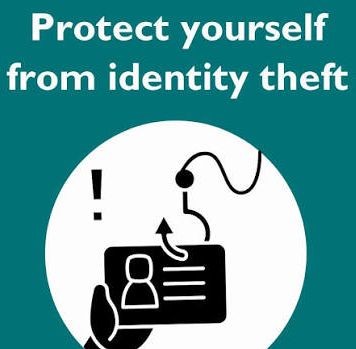
Identity theft, where publicly available details are combined with other digital traces to impersonate or exploit the child.
Online grooming and predatory engagement as less information is available to identify or approach children.
Cyberbullying or reputational harm, which often stems from persistent and uncontrolled digital records.
Unwanted distribution or misuse of images on illicit platforms, including manipulation in harmful contexts.
Children’s digital identities are long-lasting and can affect their personal and professional futures.
Thoughtful digital parenting that prioritises safety over immediate social gratification helps safeguard children’s rights, privacy, and physical security.
The practice of sharing children’s photos and personal moments on social media, though widespread and
often well-intentioned, presents clear and demonstrable risks. Evidence indicates that a significant portion of
sharented content contains contextual identifiers and personal data that can be exploited by malicious actors,
including identity thieves, online predators, and bad actors aiming to manipulate or repurpose images.
To protect children from both digital and physical harm, parents and guardians must adopt strong privacy habits,
restrict access to sensitive content, and prioritise long-term safety over short-term social sharing.
Conscious and informed digital behaviour reduces exposure to harm and empowers families to shield their children
in an increasingly interconnected online environment.
Specialised Security Services invites the public to the Mike Bolhuis Daily Projects WhatsApp Channel.
This channel is important in delivering insights into the latest crime trends, awareness, warnings and the exposure of criminals.
How to Join the WhatsApp Channel:
1. Make sure you have the latest version of WhatsApp on your device.
2. Click on the link below to join the Mike Bolhuis Daily Projects WhatsApp Channel:
3. Follow the prompts to join the channel.
4. Make sure you click on "Follow", then click on the "bell"-icon (🔔)
CONTACT MR MIKE BOLHUIS FOR SAFETY AND SECURITY MEASURES, PROTECTION, OR AN INVESTIGATION IF NEEDED.
ALL INFORMATION RECEIVED WILL BE TREATED IN THE STRICTEST CONFIDENTIALITY AND EVERY IDENTITY WILL BE PROTECTED.
Regards,
Mike Bolhuis
Specialist Investigators into
Serious Violent, Serious Economic Crimes & Serious Cybercrimes
PSIRA Reg. 1590364/421949
Mobile: +27 82 447 6116
E-mail: mike@mikebolhuis.co.za
Fax: 086 585 4924
Follow us on Facebook to view our projects -
EXTREMELY IMPORTANT: All potential clients need to be aware that owing to the nature of our work as specialist investigators there are people who have been caught on the wrong side of the law - who are trying to discredit me - Mike Bolhuis and my organisation Specialised Security Services - to get themselves off the hook. This retaliation happens on social media and creates doubt about our integrity and ability. Doubt created on social media platforms is both unwarranted and untrue. We strongly recommend that you make up your minds concerning me and our organisation only after considering all the factual information - to the exclusion of hearsay and assumptions. Furthermore, you are welcome to address your concerns directly with me should you still be unsatisfied with your conclusions. While the internet provides a lot of valuable information, it is also a platform that distributes a lot of false information. The distribution of false information, fake news, slander and hate speech constitutes a crime that can be prosecuted by law. Your own research discretion and discernment are imperative when choosing what and what not to believe.
STANDARD RULES APPLY: Upon appointment, we require a formal mandate with detailed instructions. Please take note that should you not make use of our services – you may not under any circumstance use my name or the name of my organisation as a means to achieve whatever end.
POPI ACT 4 of 2013 South Africa: Mike Bolhuis' "Specialised Security Services" falls under Section 6 of the act. Read more here: https://mikebh.link/fntdpv
SSS TASK TEAM:

Copyright © 2015- PRESENT | Mike Bolhuis Specialised Security Services | All rights reserved.
Our mailing address is:
Mike Bolhuis Specialised Security Services
PO Box 15075 Lynn East
Pretoria, Gauteng 0039
South Africa
Add us to your address book
THIS PUBLIC DOCUMENT WAS INTENDED TO BE SHARED, PLEASE DO SO.